
What Really Happens Before Starbucks Coffee Reaches Your Cup

That smell hits first. The kind of fresh coffee aroma that makes everything else pause for a second and pulls you in before you even think about it.
Behind that familiar Green Mermaid logo, there is a long, exacting journey. It starts thousands of miles away and moves through mountains, mills, roasting drums, and sealed bags before it ever becomes the brew people know so well.
Where Starbucks Coffee Really Begins
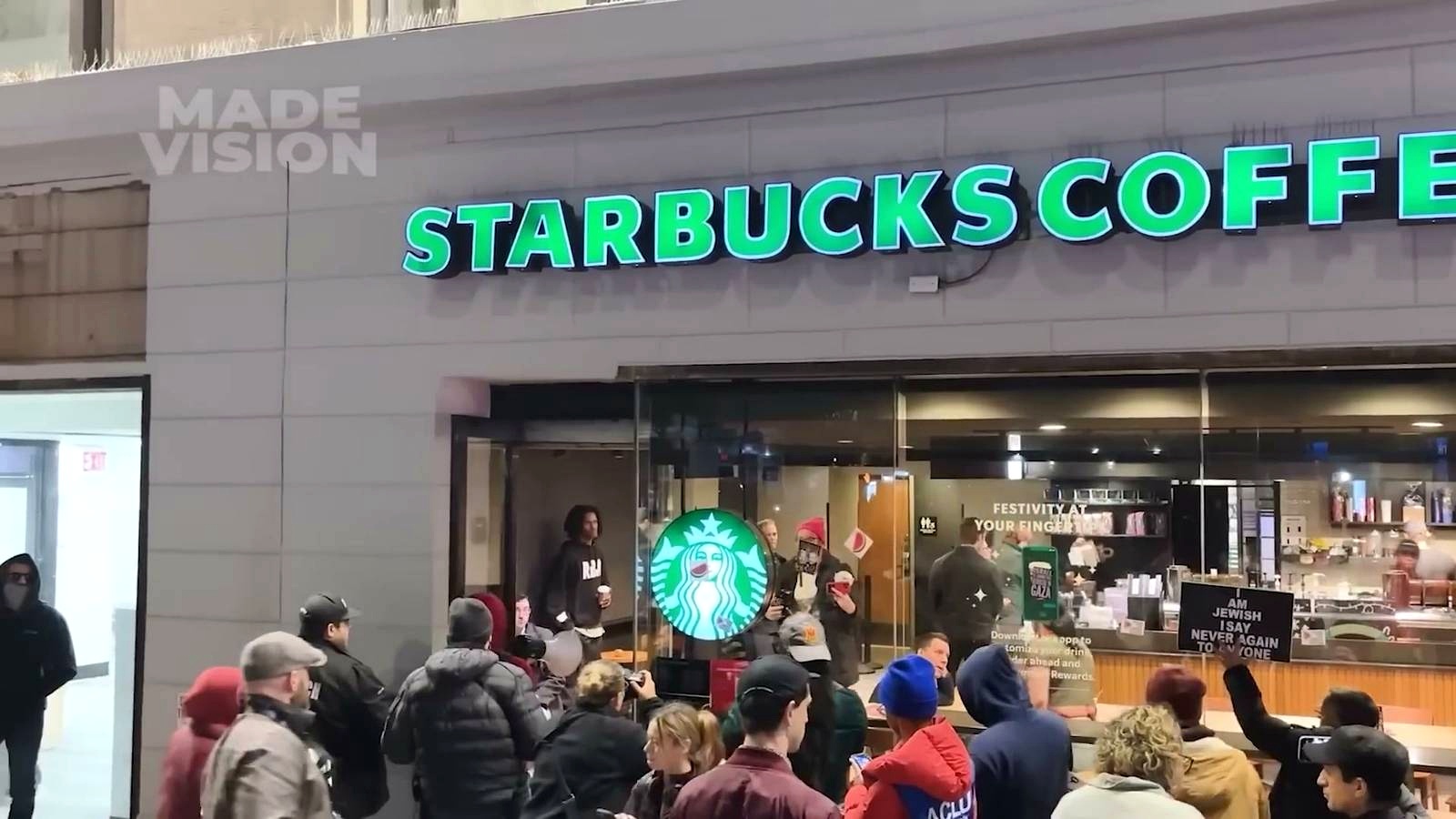
Long before a barista pulls a shot of espresso, the story starts in the coffee belt, a network of countries circling the globe where most of the world’s coffee takes root.
- Brazil is the world’s top exporter
- Vietnam and Colombia follow
- Hawaii and Puerto Rico contribute a modest share from American soil
Starbucks stands out as one of the industry’s biggest buyers, purchasing 800 million pounds of green coffee every year from more than 30 countries. Every pound is 100% Arabica, a bean chosen for its smoother mouthfeel and more nuanced flavor.
And there is a level of traceability built into that choice. A barcode on the back of a retail bag can be scanned to track the coffee to the exact region where it was grown.
The Mountain Difference
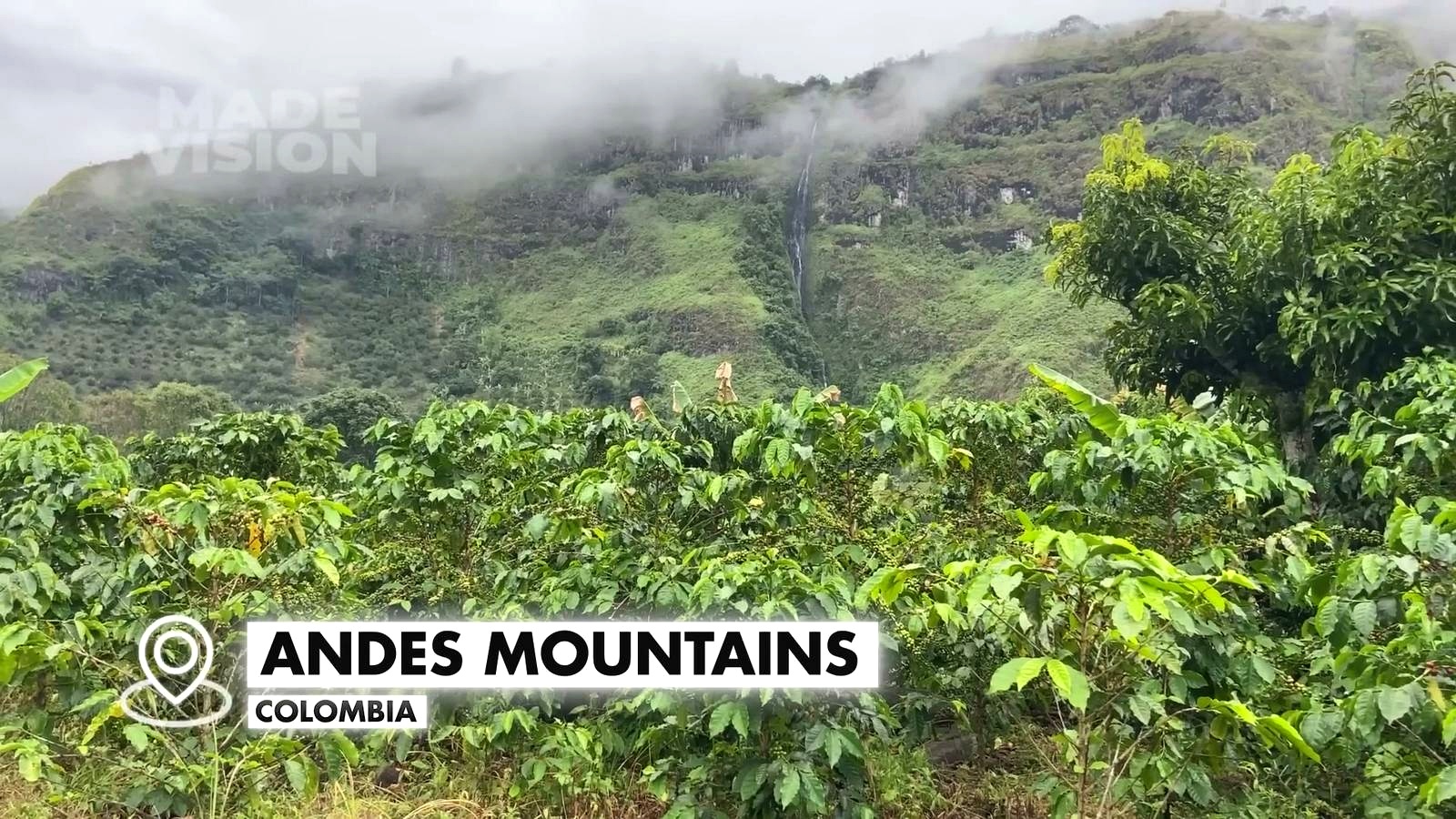
Why altitude changes everything
In Colombia’s Andes Mountains, nearly 6,000 feet above sea level, coffee grows in conditions that seem almost designed for it. Steep terrain, volcanic soil, steady rainfall, and cool mountain air all shape the cherries before they are ever picked.
Both Robusta and Arabica grow in this region, but not in the same places.
- Robusta grows lower in the warmer, more humid valleys
- Arabica flourishes higher up, above 3,000 feet
Why Starbucks avoids Robusta
Robusta cherries take around 9 to 11 months to develop and often ripen unevenly, with ripe and underripe fruit clustered together. Because valley terrain is more level, machine harvesting is common. Those machines shake and strip branches hard, collecting everything at once.
That higher yield comes at a cost. Mixing ripe and unripe fruit significantly drops quality, which is why Robusta is usually sold as cheap instant or commodity coffee. Starbucks strictly avoids it.
Why hand-picked Arabica matters
Higher on the mountain, the cooler air slows Arabica’s maturation. That extra time helps the beans develop the sweet, layered complexity that makes them so sought after.
There is a catch. On a single branch, some cherries are fully red while others are still green. Add steep slopes to the equation, and machine harvesting becomes nearly impossible. So each tree has to be picked by hand, cherry by cherry.
It is slow, labor-intensive work. But it is also the reason Arabica has the depth Starbucks wants in its specialty roasts.
The Wet Mill: A Race Against Time
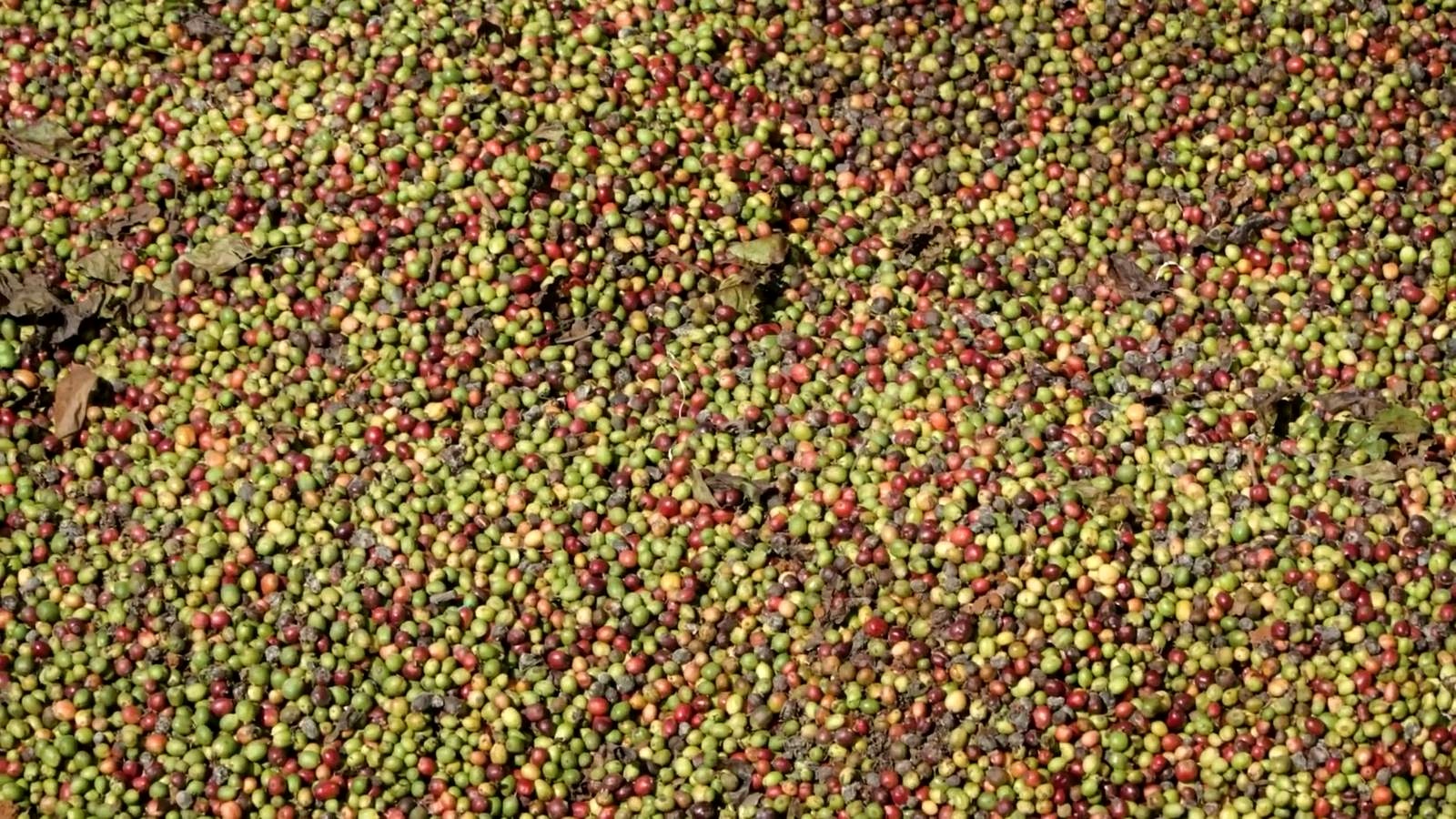
Once workers fill their baskets with red Arabica cherries, they empty the harvest into sacks and carry it down the hillside for transport to the wet mill.
At that point, speed matters. The cherries need to be stripped of their outer layers within 8 to 12 hours, before their sugars begin to break down.
What happens when farmers arrive
Every afternoon, more than 100 farmers arrive at this wet mill with the day’s harvest, from small family farms to larger commercial growers. This is one facility among thousands participating in Starbucks C.A.F.E., or Coffee and Farmer Equity practices.
That sourcing network aims to:
- Pay fair prices
- Track where beans come from
- Invest profits back into farming communities across the coffee belt
Each delivery is weighed, recorded, and tied to the farmer so payment can be based on both volume and quality.
The first quality split
Freshly picked cherries are funneled into a flume of clear water for a first separation step called floating.
- Heavier, high-density cherries sink
- Lighter “floaters” drift on the surface
- Floaters are skimmed off for lower-grade coffees
The dense cherries continue toward a screw auger and into a machine called the depulper.
How the fruit is removed
Inside the depulper, cherries are squeezed between a spinning drum and a hard surface. The beans are forced through small openings while skins and pulp are pushed aside.
The discarded fruit pulp is not wasted. It is gathered and reused as compost, feeding the next generation of coffee trees.
Fermentation, Washing, and Grading
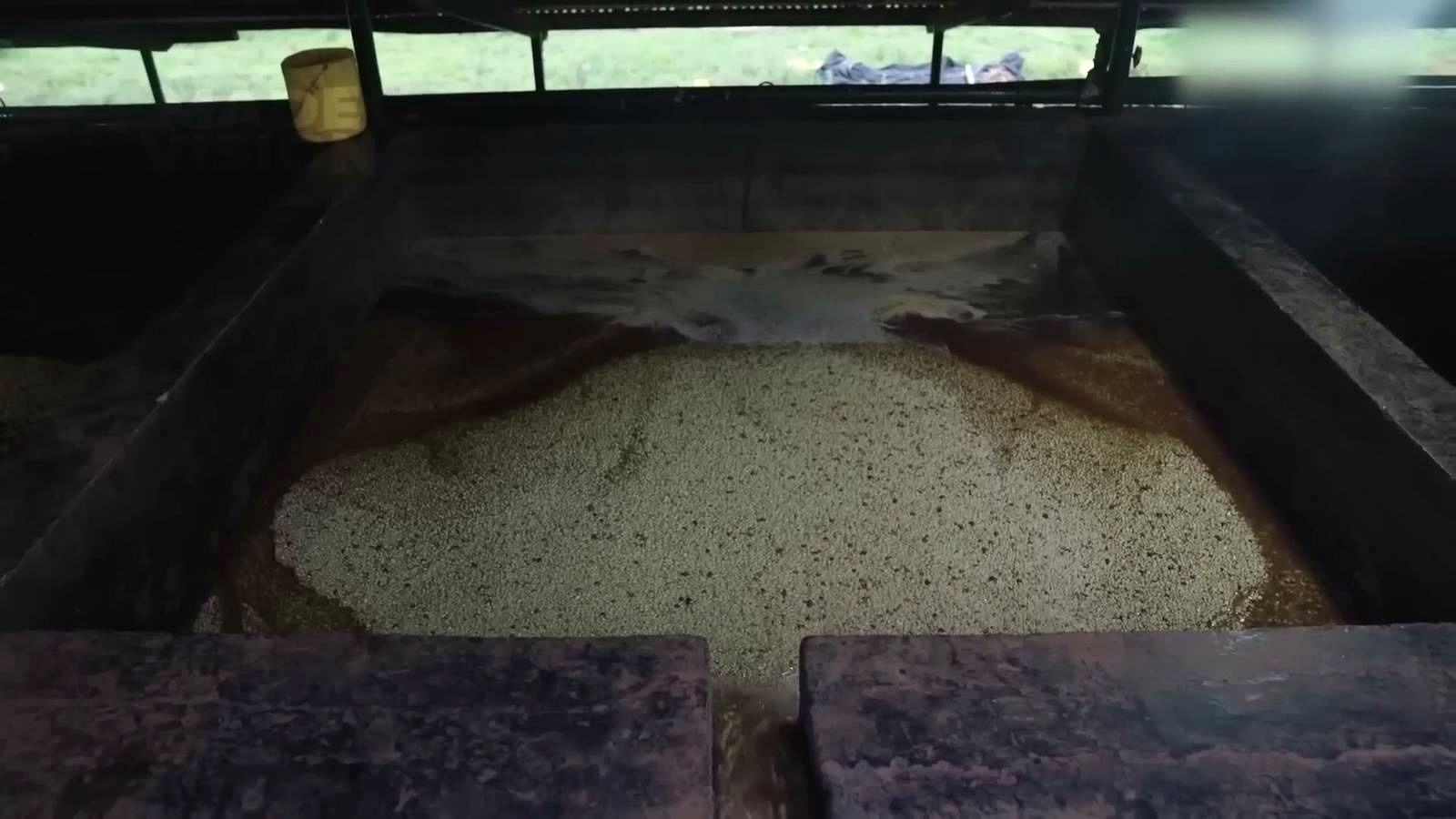
After depulping, the freed beans move through rotating screens that remove any intact cherries and larger fragments that slipped through. Those pieces are diverted and processed again.
Then the beans soak in fermentation cells for 12 to 24 hours. This rest breaks down the slimy mucilage coating the parchment so it can be rinsed away later without damaging the beans.
The washing stage
The next day, fresh mountain water carries the fermented beans into long washing troughs. Workers use long paddles to stir and push the beans against the current, stripping away the loosened mucilage as the water carries it downstream.
Another quality check happens here too
These channels also act as a grading system.
- Heavier, top-quality beans sink to the bottom
- Lighter defects float and drift downstream
- Those lower-grade beans are collected separately and sold at a lower price
Even those lower-quality beans still generate income for producers, but the dense Arabica beans move on.
They enter a soaking cell for the removal of any lingering mucilage. A producer performs a final hand test, checking that the beans are no longer sticky as they head into drying.
Drying the Beans in the Sun
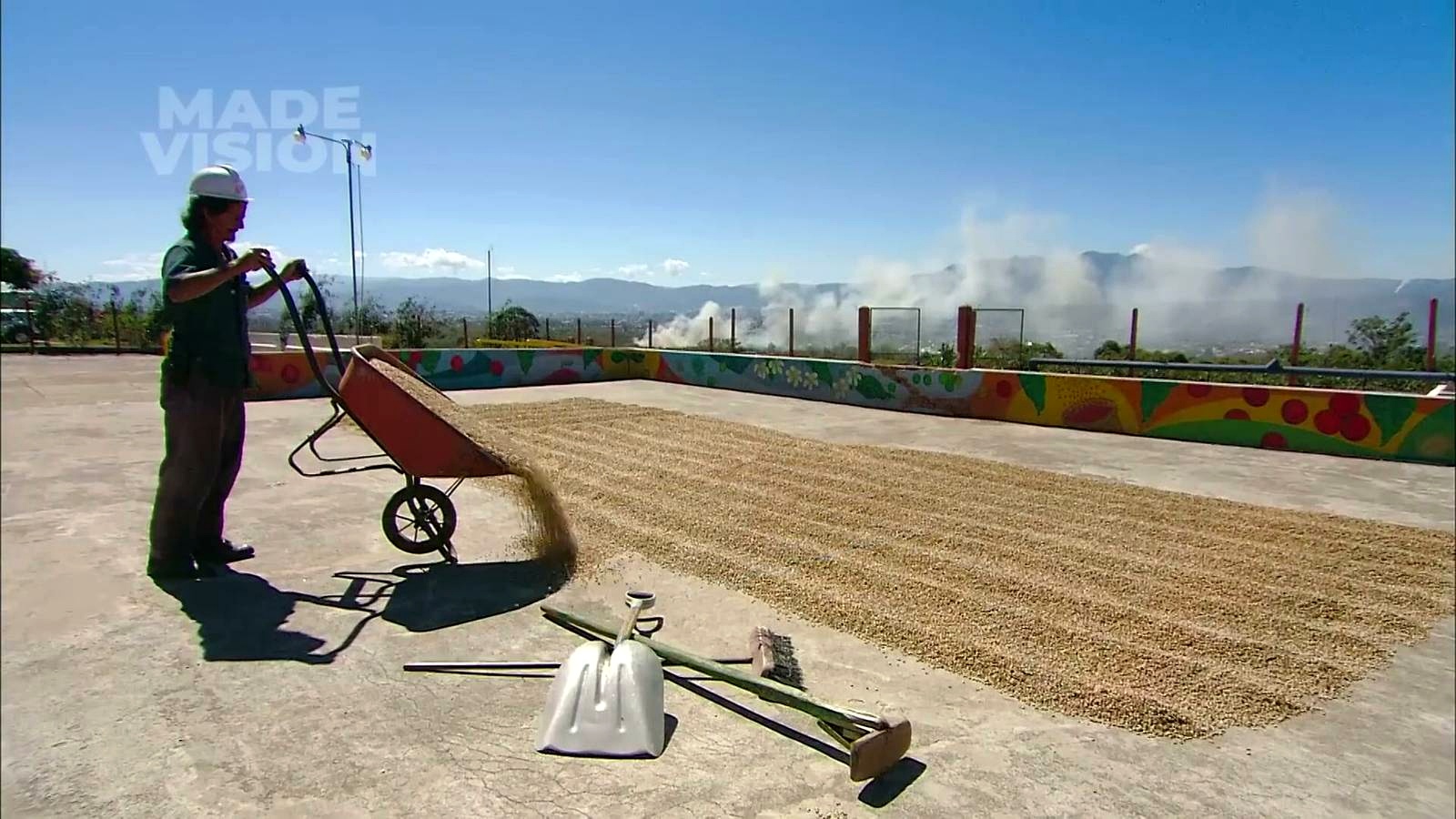
Now clean, the beans are still too wet, holding close to 35% moisture. To bring that down, workers spread them across a wide cement patio to dry in the sun.
Throughout the day, they rake and turn the beans so all of them get equal sunlight. Over four or so days, moisture drops to about 11%.
Even then, the beans are still wrapped in a thin protective layer called parchment, like the papery skin around a peanut. A milling machine rubs the beans against each other until that shell breaks away, revealing the pale grayish-green raw coffee beans inside.
From Green Beans to Global Shipment
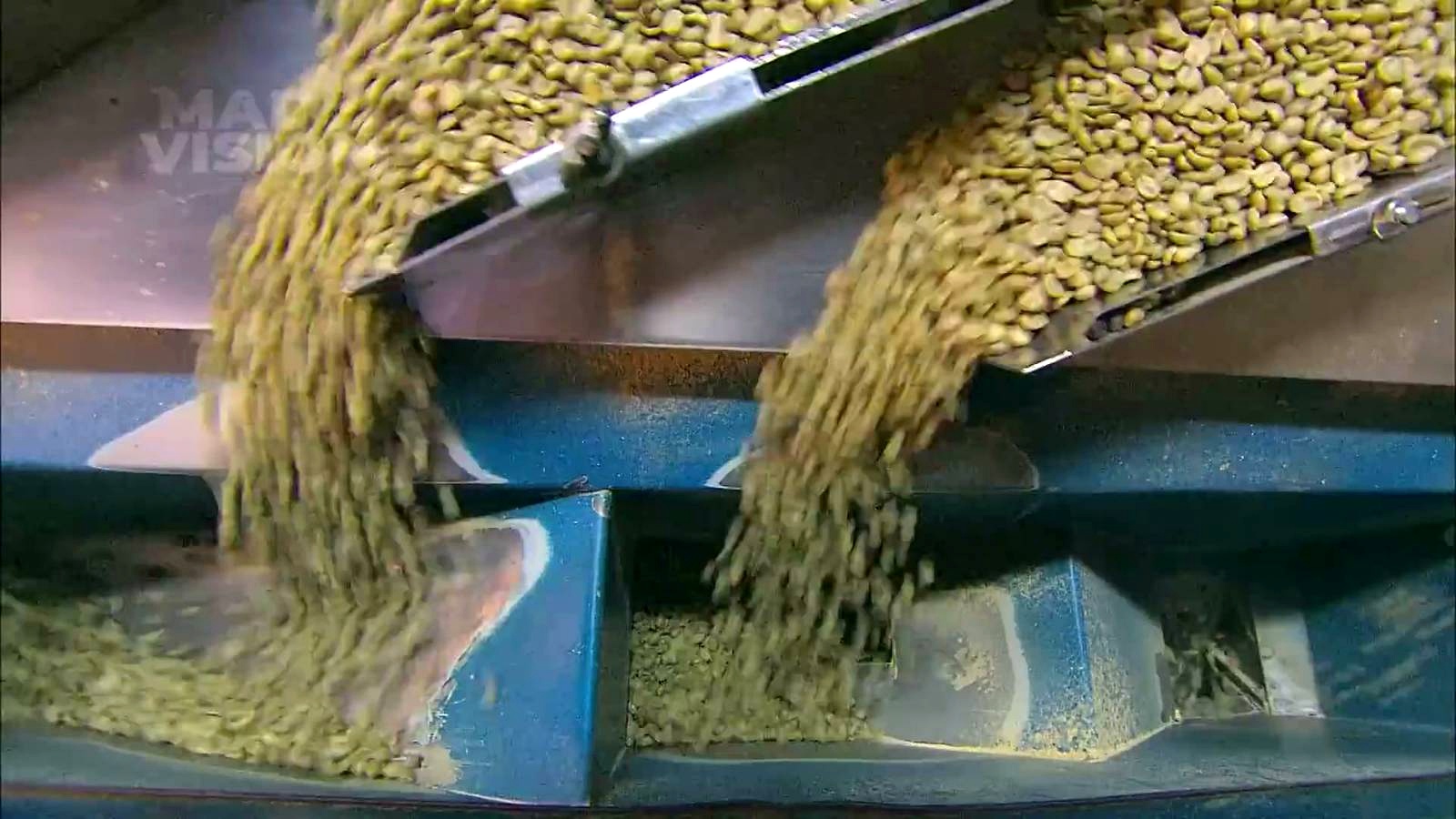
Those green beans are portioned into sturdy burlap or jute bags. The porous material keeps air moving, helping prevent mold and degradation.
Each sack is filled with roughly 100 pounds, sewn closed, and moved to storage. There, the beans sit and mature, slowly developing more depth and character while waiting for export.
Single origin or blend?
At this point, a producer can choose to sell the beans in one of two ways:
- Single origin: sourced from one country, region, or farm so the location’s altitude, weather, and soil show clearly in the final brew
- Blend: combined with other coffees to create a more specific final profile
The batch being followed here is headed for Starbucks specialty blends, so the next stop is roasting.
Inside the Starbucks Roasting Plant
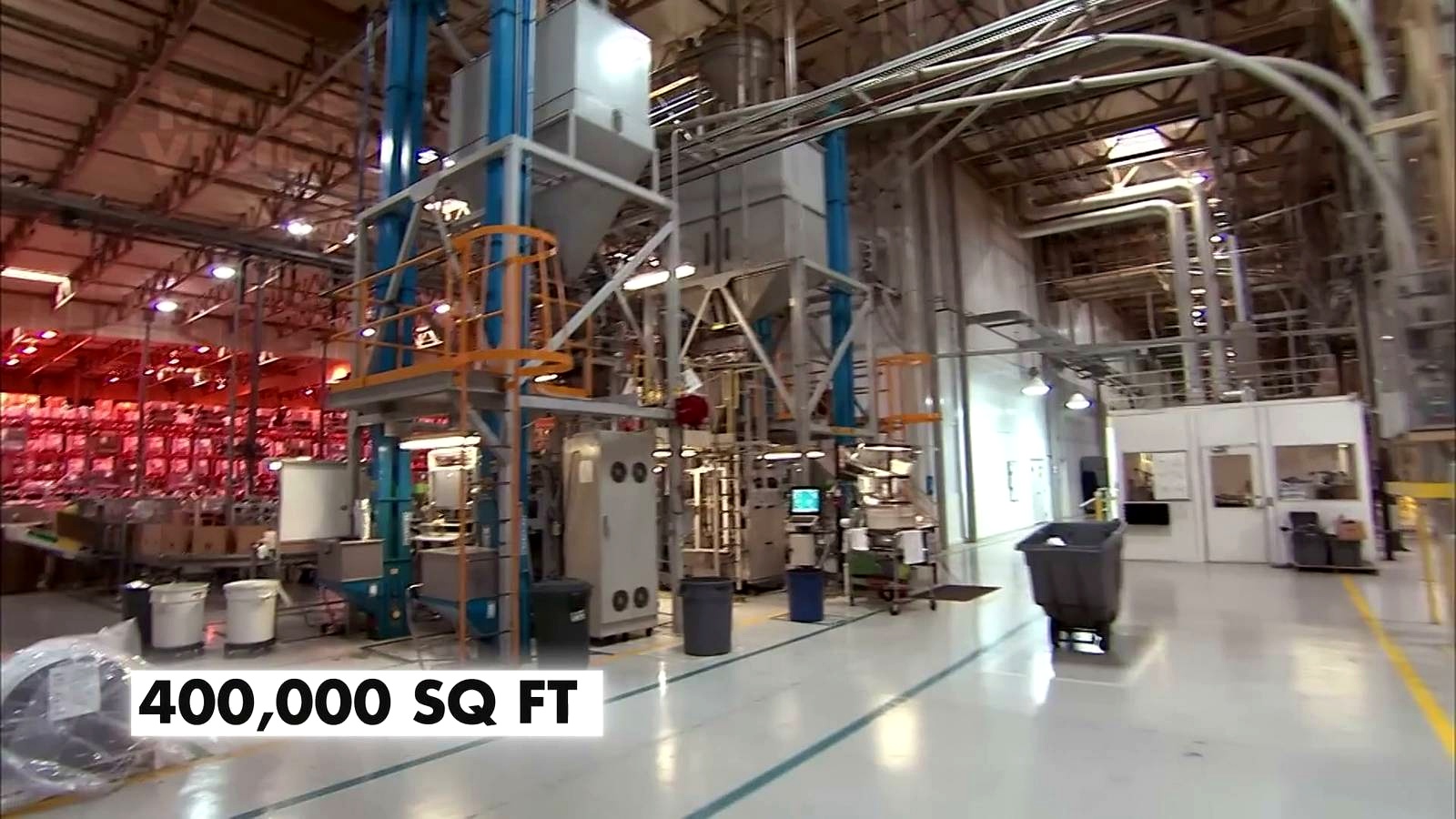
After crossing oceans, the beans arrive at one of Starbucks’ large-scale roasting plants. One U.S. plant alone covers nearly 400,000 square feet and produces more than 100 blends and single-origin coffees.
More than 2 million pounds move through its roasting lines every week. Production runs around the clock, 24 hours a day.
The shipment is tested before it is accepted
Before the full shipment enters the main line, a probe sample is pulled from a burlap bag and taken to the sensory lab for a trial roast.
There, a panel of expert tasters called Q-graders evaluates the coffee through cupping.
- The sample is roasted and ground
- Hot water is poured over the grounds
- A crust forms on top
- Tasters break the crust with two spoons to release aromas
- They lean in for focused sniffs
- They slurp the coffee forcefully across the palate
They judge balance, sweetness, acidity, and off notes, then spit the liquid out to avoid a heavy caffeine hit. If the lot matches Starbucks’ premium roast profile, it is approved and released into the main roasting stream.
How Starbucks Roasts Its Coffee
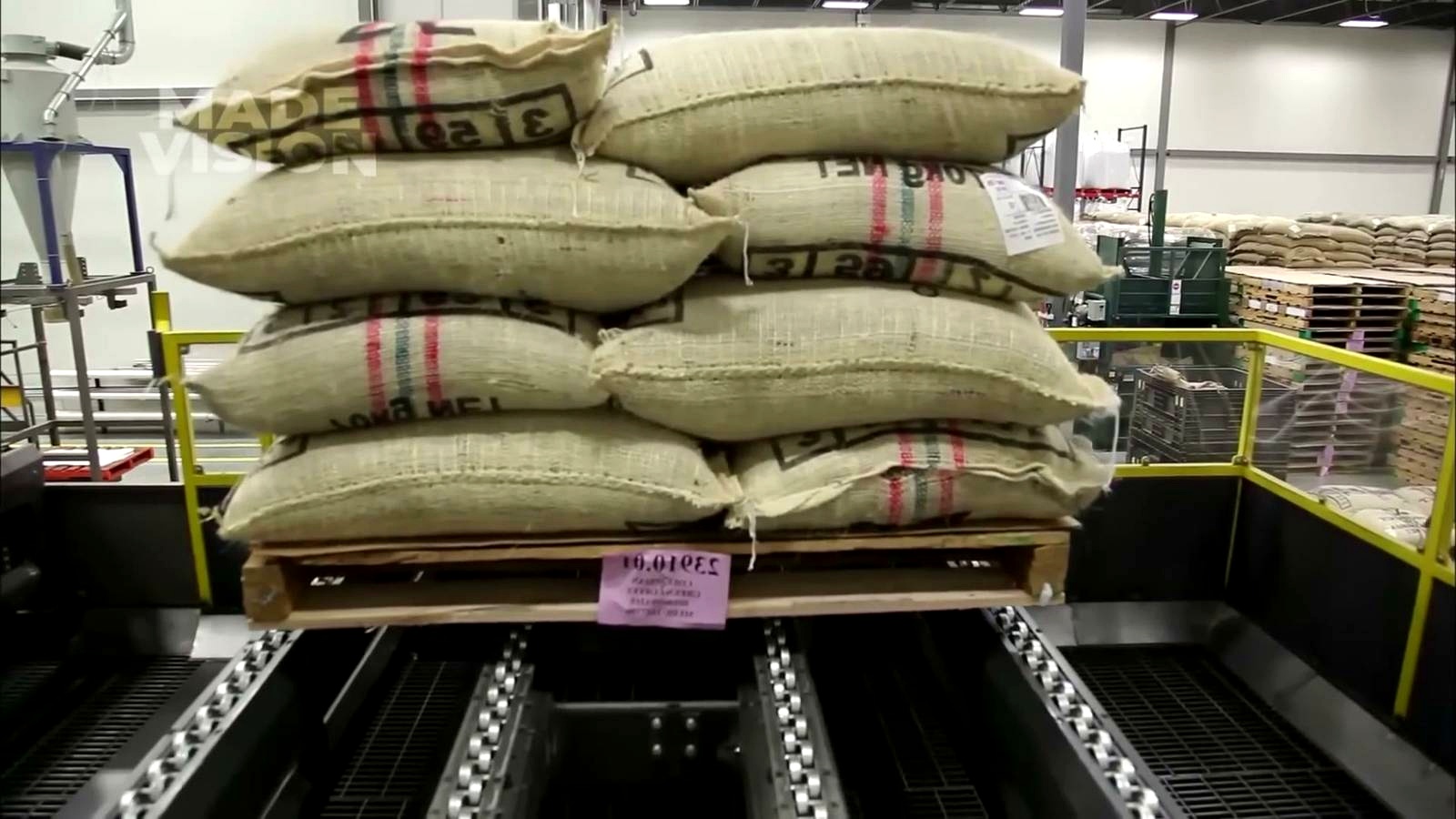
Production begins with pallets of green coffee brought in by forklift and placed on a sifting machine. Workers slice open the burlap bags, letting beans drop through floor grates into a hopper below.
A conveyance system moves them into a vibrating sifter that shakes away any field debris. Then the beans are fed pneumatically into towering green storage silos nearly 40 feet high, each capable of holding up to 180,000 pounds of green coffee.
Building the blend
At the base of the silos, tubing feeds a dosing system that draws precise percentages of single-origin Arabica from different silos. This is where Starbucks builds its house blends before the custom mix is released into the roasting drum.
Among the blends mentioned are:
- Odyssey Blend
- Green Apron Blend
What happens inside the roaster
Inside the roaster, internal baffles keep the beans in constant motion to prevent scorching as temperatures approach 500°F.
At that heat, the transformation becomes dramatic:
- Remaining moisture evaporates
- Trapped gases build pressure inside the beans
- The beans burst in a popping moment called the first crack
- They swell to nearly twice their original size
After the first crack, timing becomes everything. The batch is monitored second by second to create Starbucks’ three main roast profiles.
- Blonde roast: pulled soon after first crack, around 10 minutes
- Medium roast: extends closer to 13 minutes
- Dark roast: can continue up to 18 minutes or into the second crack, when oils rise to the surface and the profile turns bold and smoky
Cooling, Blending, and Sealing in Freshness
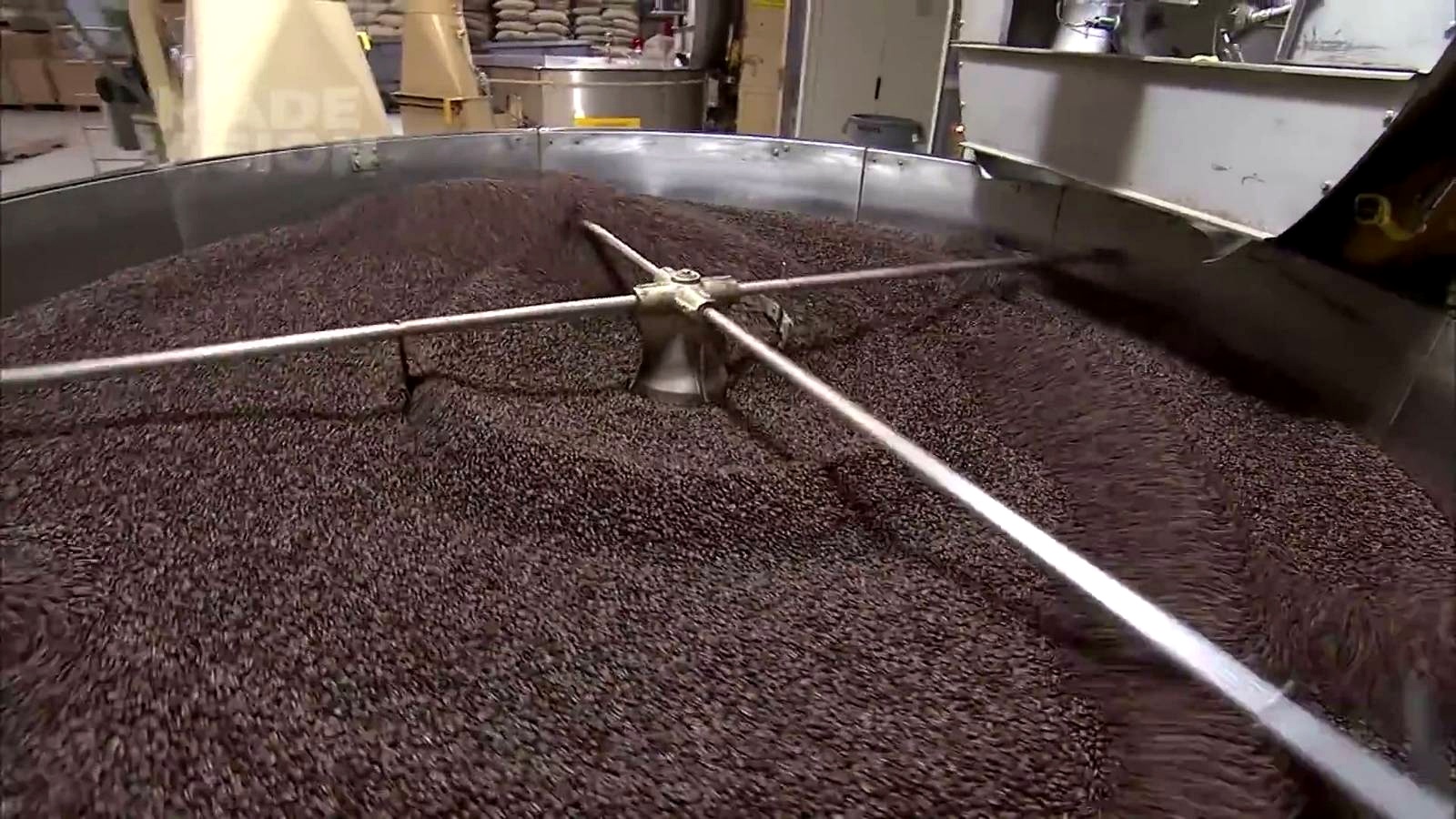
When the desired roast is reached, the drum opens and the beans spill onto a perforated cooling tray. Rotating arms stir them while powerful fans pull air down through the pile, dropping the temperature to 200°F in just a few minutes and stopping the roast immediately.
Once cooled, the beans discharge through the bottom of the tray and travel through a pneumatic tube that removes papery chaff and other light waste.
The final blending stage
The roasted beans then enter large rotating tumblers, where they are mixed with other roasted batches and flavors to create Starbucks proprietary blends.
Each combination is proportioned to highlight specific notes:
- Rich chocolate
- Smooth caramel
- Toasted nutty undertones
This process results in familiar coffees like:
- Caffè Verona
- Pike Place
- Siren’s Blend
Throughout blending, exposure to air is kept to a minimum because oxygen is one of the fastest ways to dull that fresh-roasted taste.
Why the bags are designed the way they are
In packaging, scales portion exact weights into bags, which are then hermetically sealed to lock in freshness.
But freshly roasted coffee continues releasing carbon dioxide for days. So each package gets a small one-way valve that lets CO2 escape while keeping oxygen from flowing back in.
Before any bag leaves the roaster, it goes through a final pressure and leak test. Then it is packed into cases and sent to stores around the world.
By the time it lands on the shelf, that long journey is hidden inside a single bag, ready to be ground, brewed, and turned into the cafe experience people recognize instantly.
FAQ
What kind of coffee beans does Starbucks use?
Starbucks uses 100% Arabica beans, chosen for their smoother mouthfeel and more nuanced flavor.
Why doesn’t Starbucks use Robusta?
Robusta is commonly machine harvested with ripe and unripe cherries collected together, which significantly lowers quality. It is usually sold as cheap instant or commodity coffee, which Starbucks avoids.
Why are Arabica beans picked by hand?
Arabica grows on steep slopes, and cherries on the same branch ripen at different times. Hand-picking cherry by cherry is the only practical way to select the ripe fruit.
What happens to coffee cherries after harvest?
They are taken to a wet mill, sorted by density in water, depulped, fermented, washed, graded, dried in the sun, and milled to remove the parchment layer.
How does Starbucks test coffee before roasting it at scale?
A probe sample is trial roasted and evaluated in a sensory lab by expert tasters using cupping, where they judge aroma, balance, sweetness, acidity, and off notes.
What are Starbucks’ main roast profiles?
The three main roast profiles are blonde, medium, and dark, with darker roasts spending more time in the roaster and developing bolder, smokier characteristics.
Why do Starbucks coffee bags have a small valve?
The one-way valve lets carbon dioxide escape from fresh roasted beans while preventing oxygen from getting in, which helps preserve freshness.
Video Reference

Hey, I’m Francis Booker. I’ve always liked places that feel alive — the kind of cafés where people talk for hours, meet friends after work, or just stop by for a coffee and end up staying much longer than planned. That’s probably why I enjoy writing about café culture in the UAE so much. For me, it’s not only about the coffee itself, but also about the mood, the people, and the feeling a place leaves behind. Through my posts on FarziCafe, I share spots, moments, and little observations that make café life here so interesting. Glad you’re here.