
The Home Espresso Machine That Might Change Your Morning
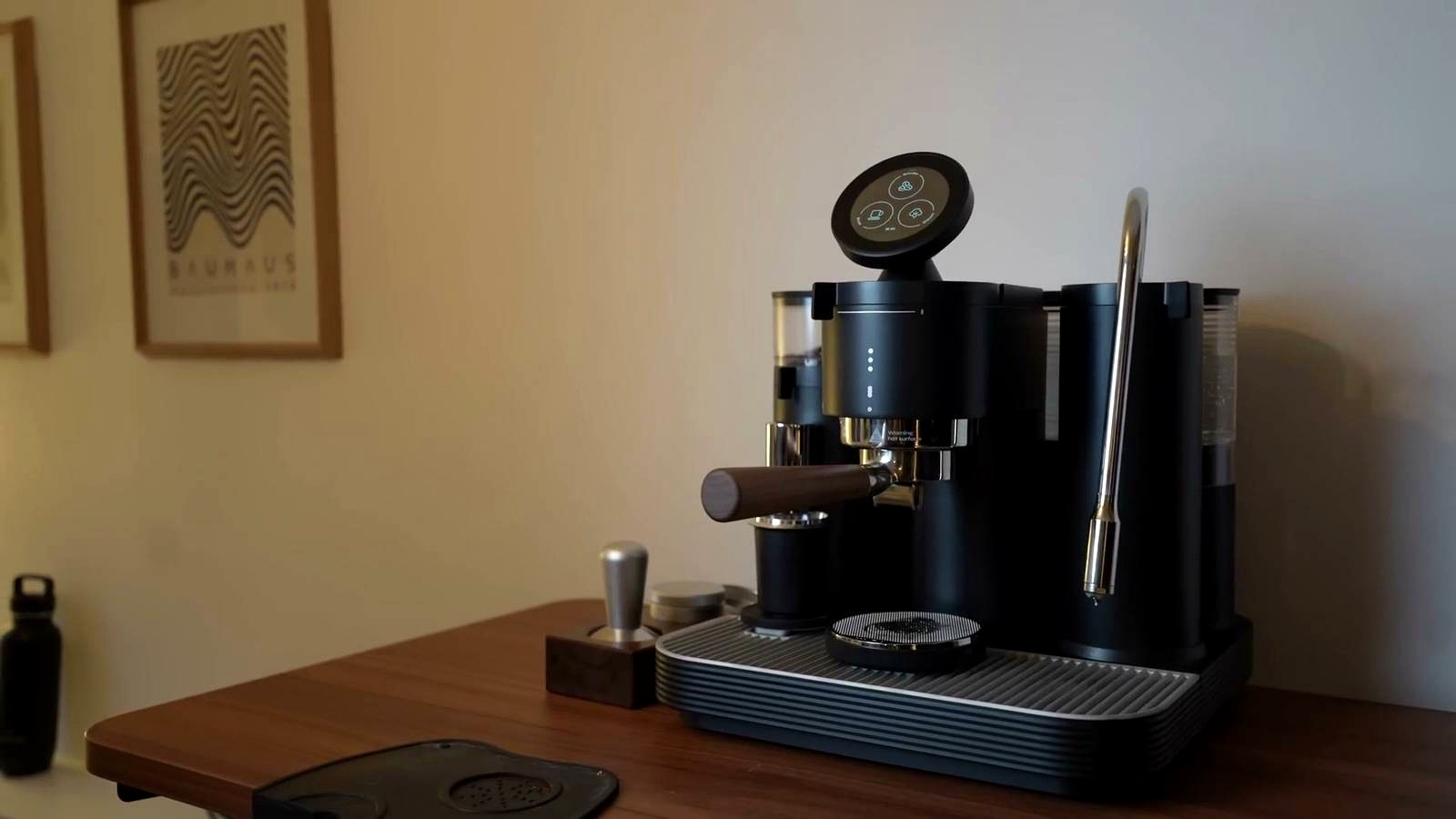
There was a time when a truly great flat white or cappuccino felt out of reach unless you left the house. That gap between home coffee and coffee shop coffee used to be huge. Now, machines like the Meraki are making that line feel a lot thinner.
After living with the machine for a couple of weeks and using it daily for four to five coffees a day, the verdict here is clear: this is a seriously impressive home espresso setup. And what makes it stand out is not just what it can do, but how much it includes from the start.
Why the Meraki Espresso Machine Feels Different
The Meraki is positioned as an all-round solution for making better coffee at home. It is a dual boiler espresso machine, which means it can pull shots and steam milk at the same time. It also uses a PID-controlled boiler system for precise temperature stability, a feature often found on more expensive machines.
That matters because the machine is clearly aimed at people who want café-style drinks at home without building a complicated setup piece by piece.
- Dual boiler system
- PID-controlled boiler for temperature stability
- Built-in grinder that is described as actually good
- Powerful steam wand
- Built-in scale for brewing
- Simple on-screen controls
The big promise is simple: buy this machine, and you do not need to buy anything else.
An Out-of-the-Box Setup That Actually Feels Complete
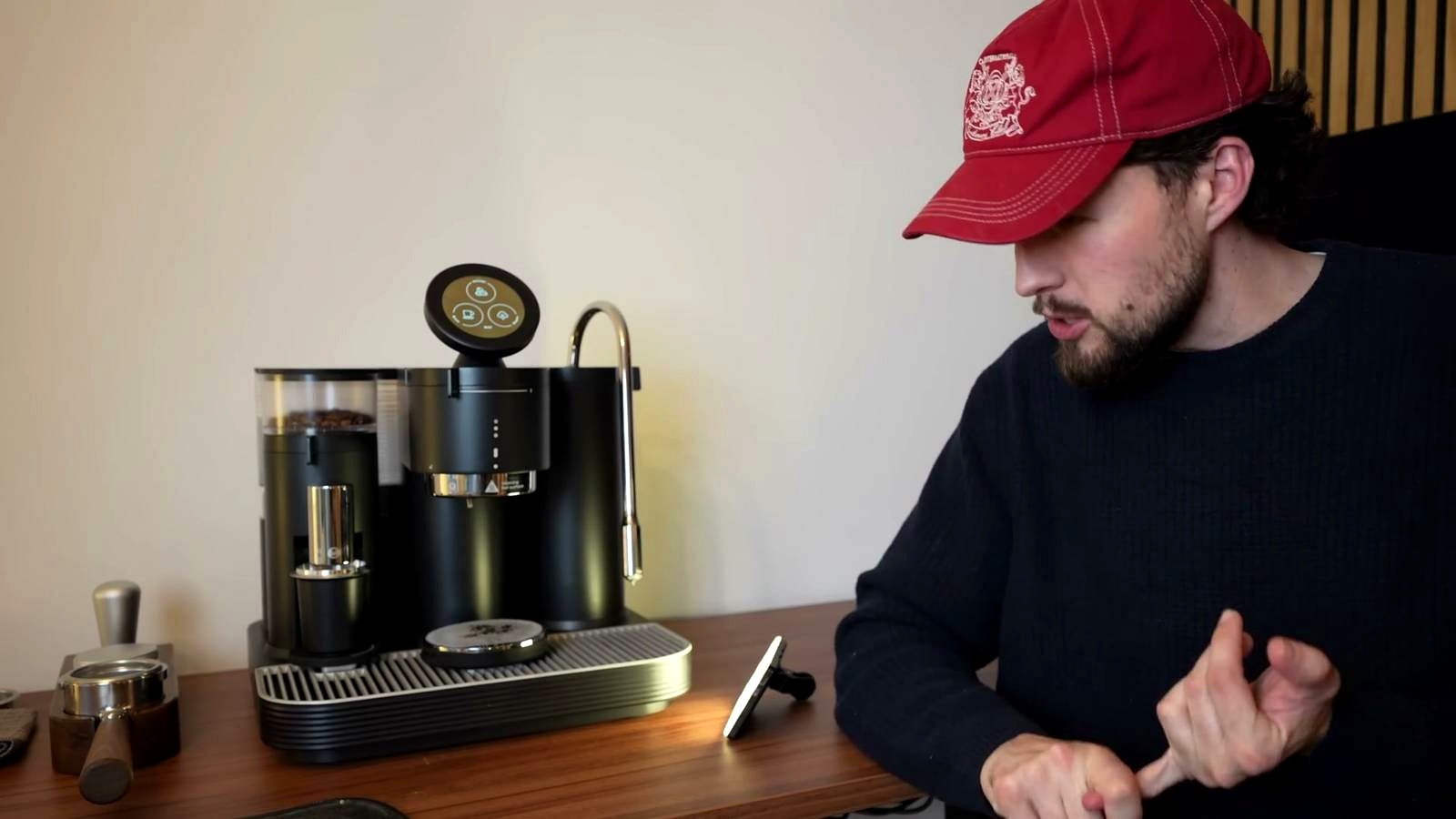
This is where the Meraki starts to build real momentum. A lot of home espresso setups turn into a long shopping list. Grinder, scale, tamper, milk pitcher, portafilters, tools, accessories. It adds up quickly.
Here, the machine arrives with what feels like a full kit.
What Comes Included
- 58mm portafilter with a wooden handle
- Double spout attachment
- Bottomless portafilter option by removing the spout
- Distribution tool
- Heavy tamper
- Wooden dock
- Dosing cup
- Blank basket for backflushing
- Cloth
That 58mm size is especially notable because it matches the size used on commercial coffee shop machines. The accessories are described as weighty, solid, and high quality. That feeling comes up again and again: heavy, substantial, built well.
The Design Is Unusual, and That’s Part of the Appeal
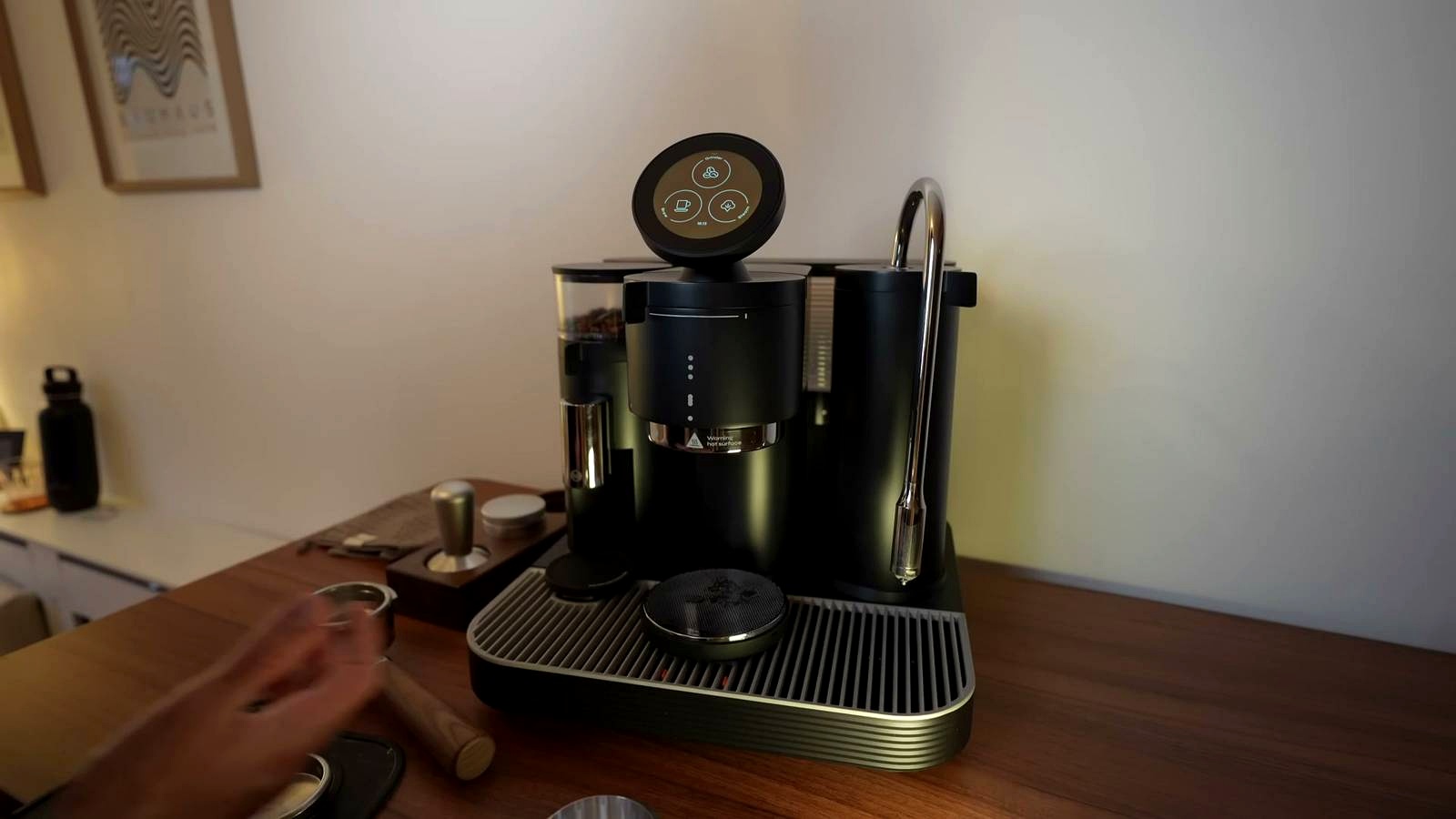
Some machines try to disappear into the kitchen. This one does not. The Meraki has a design that feels unique, even a little dramatic. Its shape was compared to a city skyline, with three spherical towers and a water tank at the back.
More importantly, the workflow runs from left to right in a way that mimics commercial café machines. That gives it a more serious, purpose-built feel without becoming intimidating.
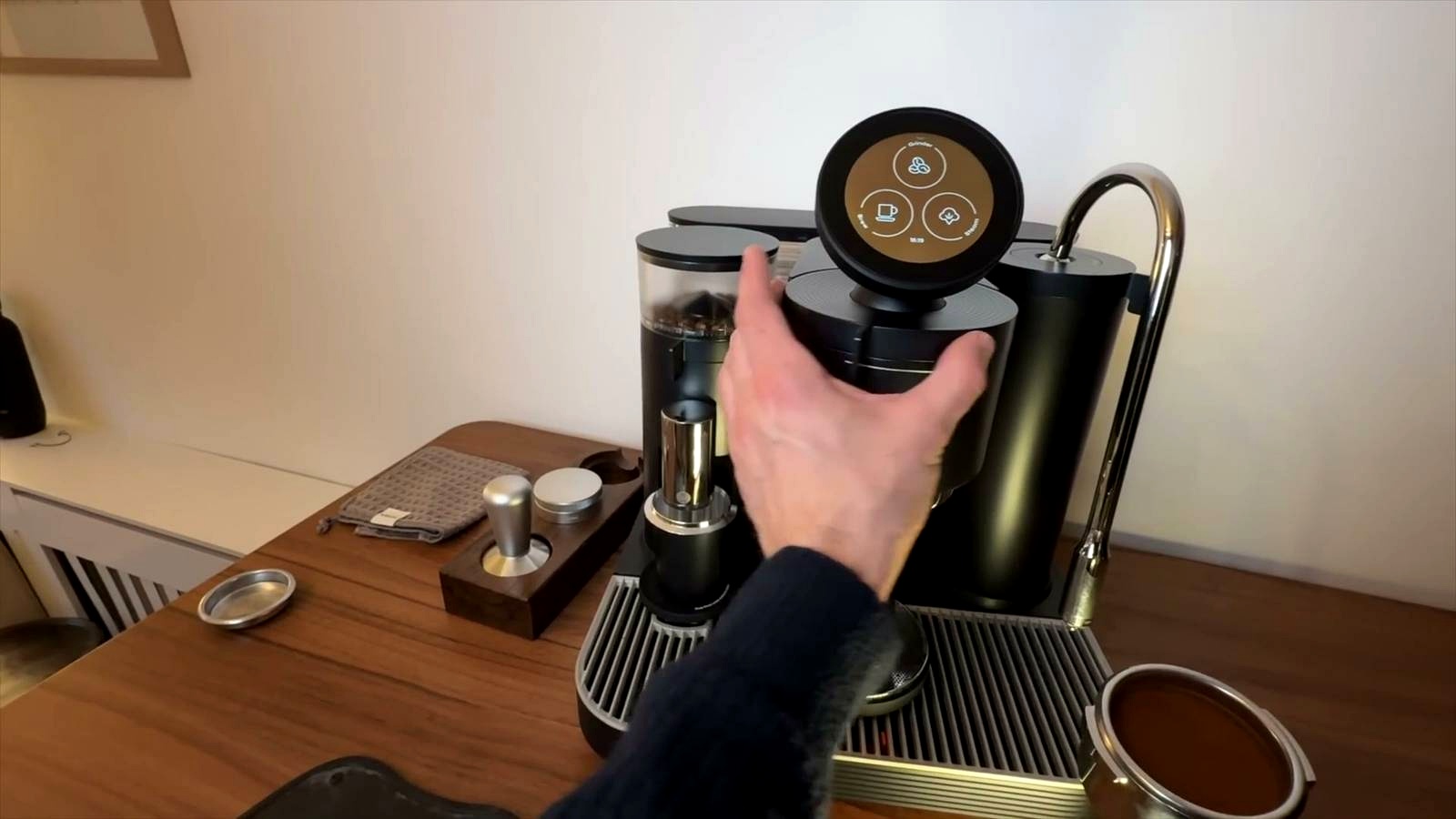
Everything is controlled by the screen, but the interface avoids the trap of becoming cluttered or menu-heavy.
The Screen Keeps It Simple
Instead of endless drink options and scrolling through menus, the core functions stay focused:
- Brew
- Grinder
- Steam
That simplicity is a major part of the machine’s appeal. It behaves like a proper espresso machine, not a gadget trying to do everything.
How the Coffee-Making Workflow Actually Feels
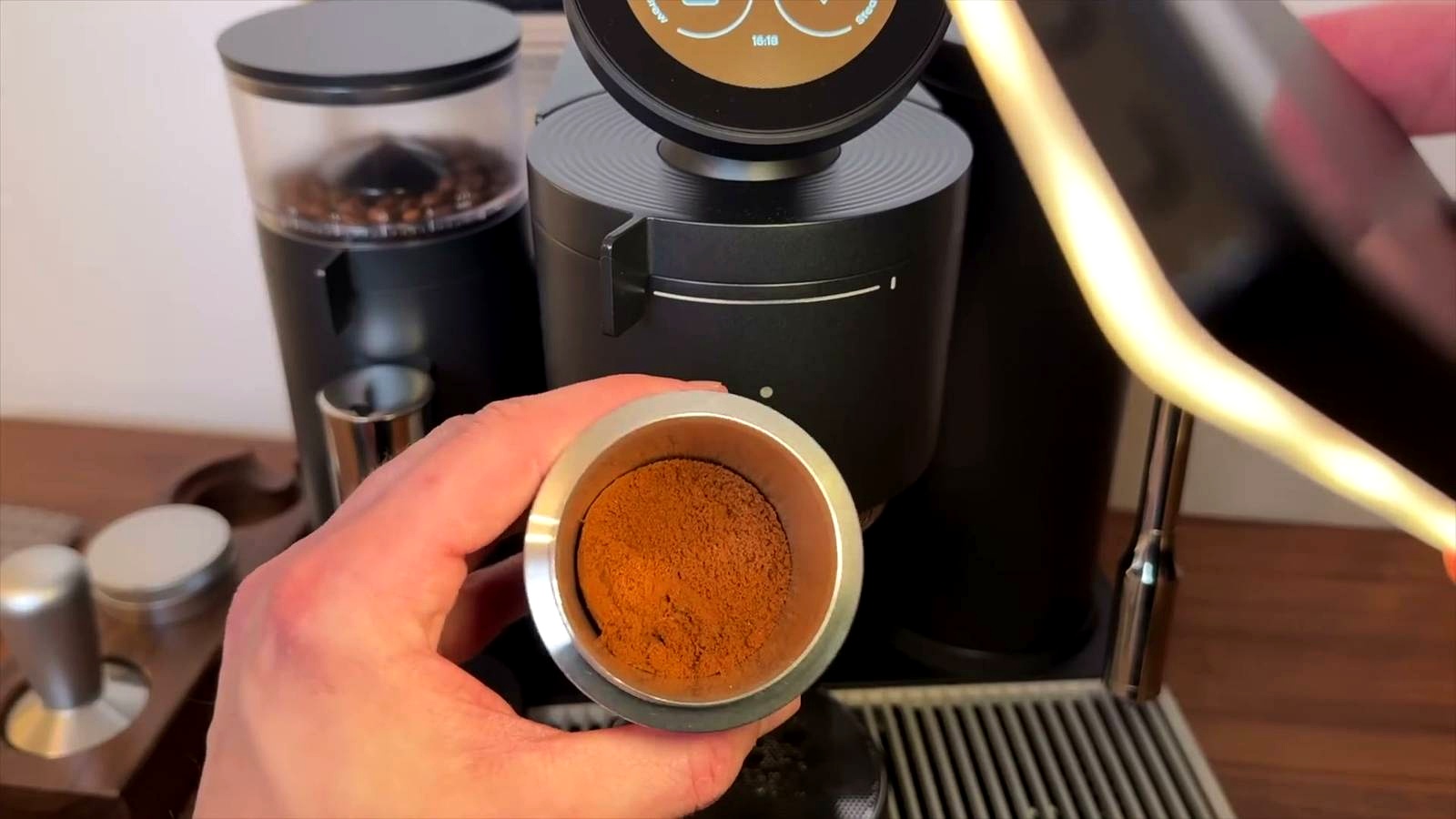
The Meraki’s grinder workflow is one of the biggest surprises. The hopper can simply be filled with beans, so there is no need to single dose. For people who want consistency without extra steps, that is a big deal.
The dosing cup locks into place magnetically, which gives the process a more polished feel. Grind size is adjusted manually, while the screen reflects those changes. In the example shown, the grind size was set to 15 and the grind weight to 18g.
Then came the result that changes the mood instantly: 18g exactly.
Grinding and Dosing
- Fill the hopper with beans
- Place the dosing cup under the grinder
- Choose grind size manually
- Select grind weight on screen
- Press grind
The grounds were described as lovely and fluffy, with an exact 18g dose landing in the cup. That kind of consistency is the sort of thing home users usually chase through upgrades.
Pulling the Shot
The built-in scale means there is no need for a separate coffee scale. That is one more item removed from the counter and one more expense avoided.
For brewing, the machine was set to produce 36g out from 18g in, a 1:2 ratio. The screen displays the shot as it brews and stops automatically at the target weight.
In this run, the shot finished at:
- 18g in
- 36g out
- 24 seconds
That was slightly shorter than the usual 28 seconds being achieved, but the espresso still looked rich and appealing, with crema on top.
The Steam Wand Might Be the Star
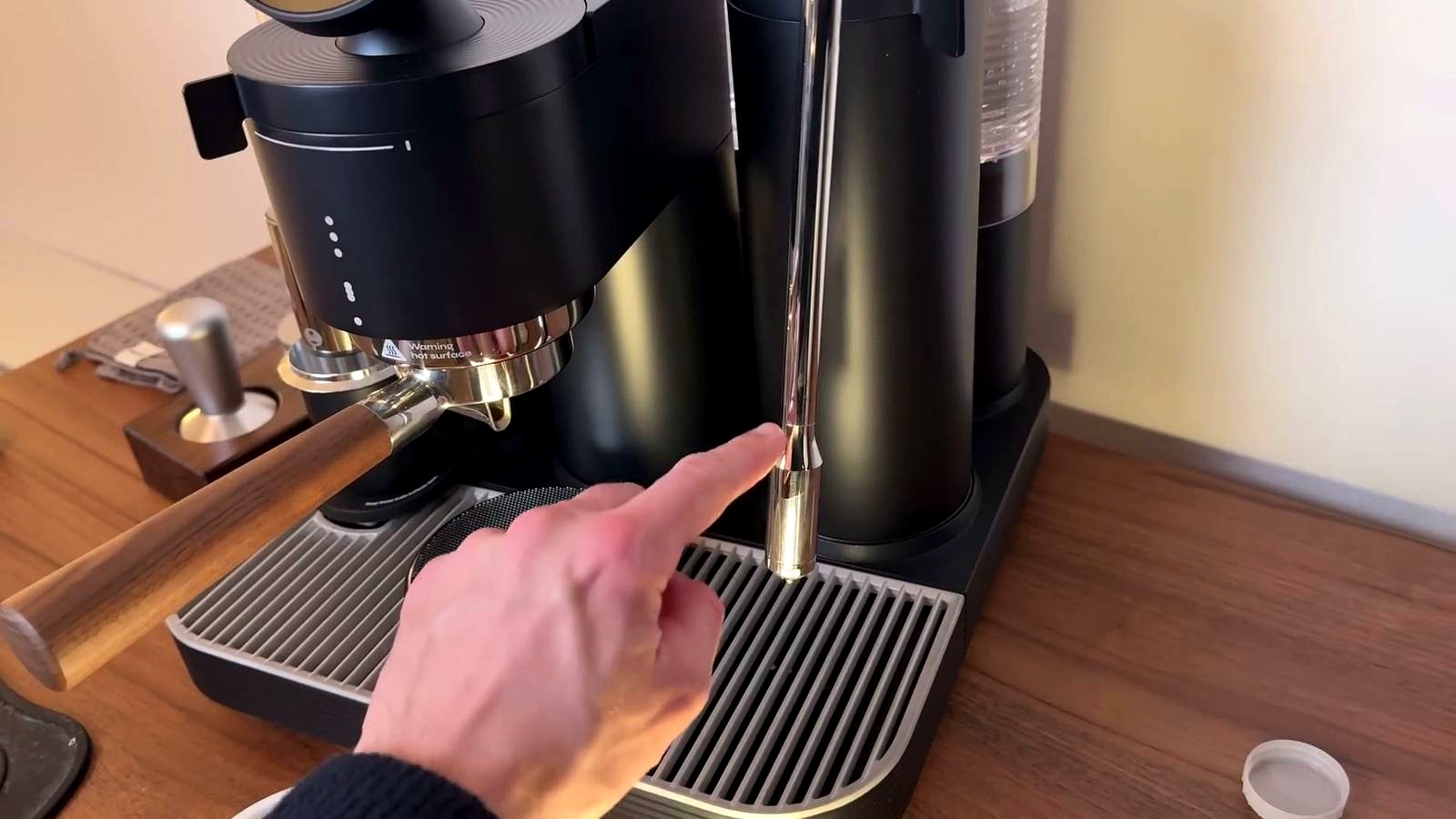
If milk drinks are the real test, this is where the machine makes its case. The Meraki has a powerful steam wand, and unlike weaker home machines, it does not feel like a compromise.
Because it is a dual boiler, the machine can steam milk while pulling a shot. In real daily use, that means a much smoother workflow.
Steam Control Options
The steam settings can be adjusted on screen, including:
- Target temperature
- Steam pressure: strong, medium, mild, or gentle
The steam wand was used on strong, creating a huge vortex in the milk. That whirlpool effect turned out to be one of the most impressive parts of the experience. Even though the wand itself looked thick at first, its power and ease of use quickly made that design choice make sense.
The milk texture was praised strongly, and the wand was called forgiving and easy to use. For anyone chasing flat whites, cappuccinos, or lattes at home, that is a huge point in the Meraki’s favor.
What Could Be Better?
This is not a perfect machine, and one small criticism did come through. The paddle used for water flow was described as functional rather than premium.
- It feels plastic
- It is a bit clicky at the edge
- There is a tiny bit of play
That said, it still works well. And outside of that, the machine was praised for being quiet, both in water flow and grinding.
Who the Meraki Espresso Machine Is Really For
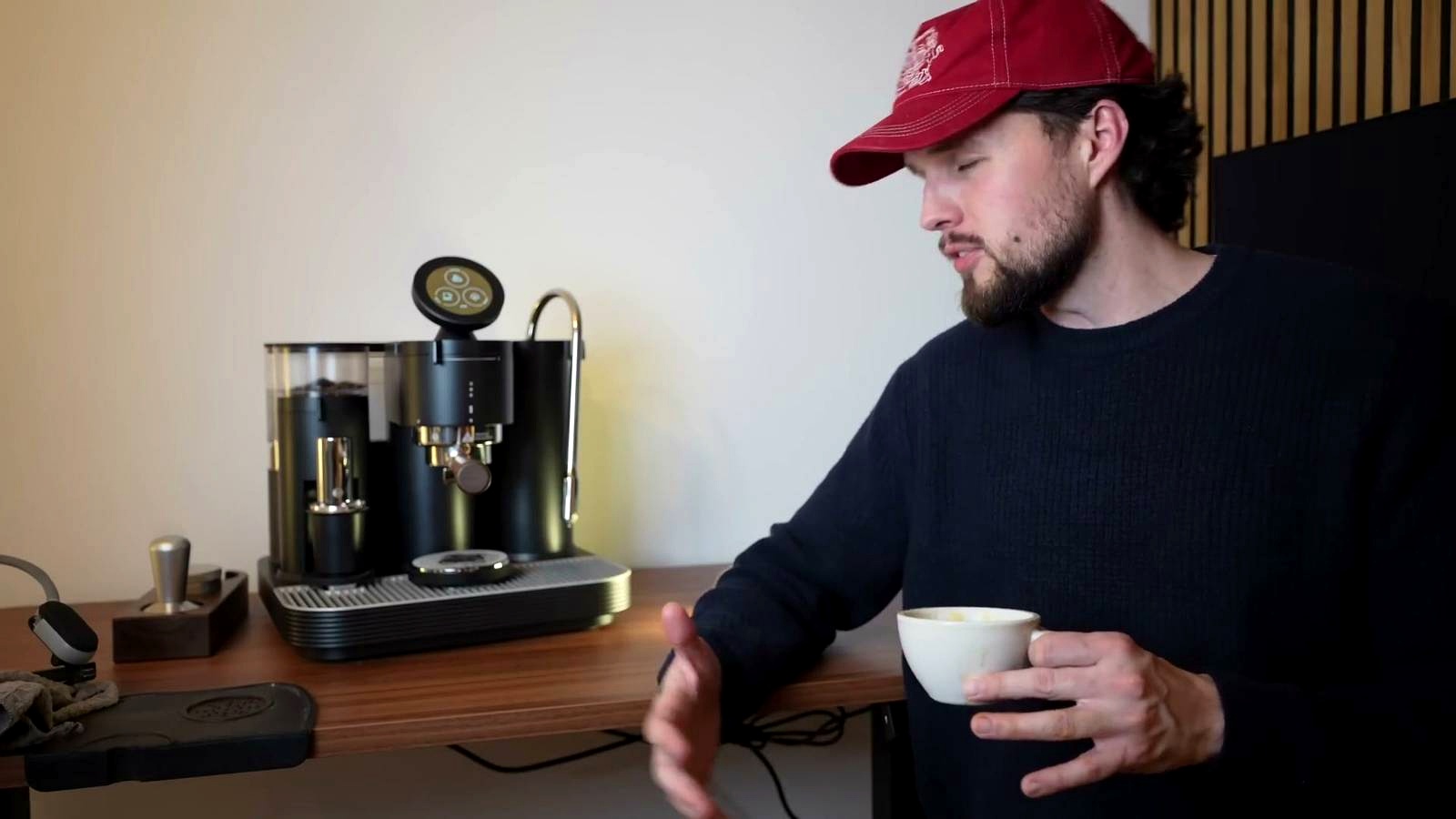
This machine feels aimed at two types of buyers: people upgrading from a cheaper setup, and people ready to buy a serious first espresso machine if the budget allows.
The key argument is hard to ignore. Many home coffee users end up spending money on upgrades for less capable machines: expensive scales, tampers, portafilters, docking stations, distribution tools, milk pitchers. The Meraki rolls so much of that into one package that it changes the value conversation.
If someone is already close to this price point with a weaker machine and extra accessories, this machine starts to look less like a luxury and more like the smarter jump.
The Final Feeling
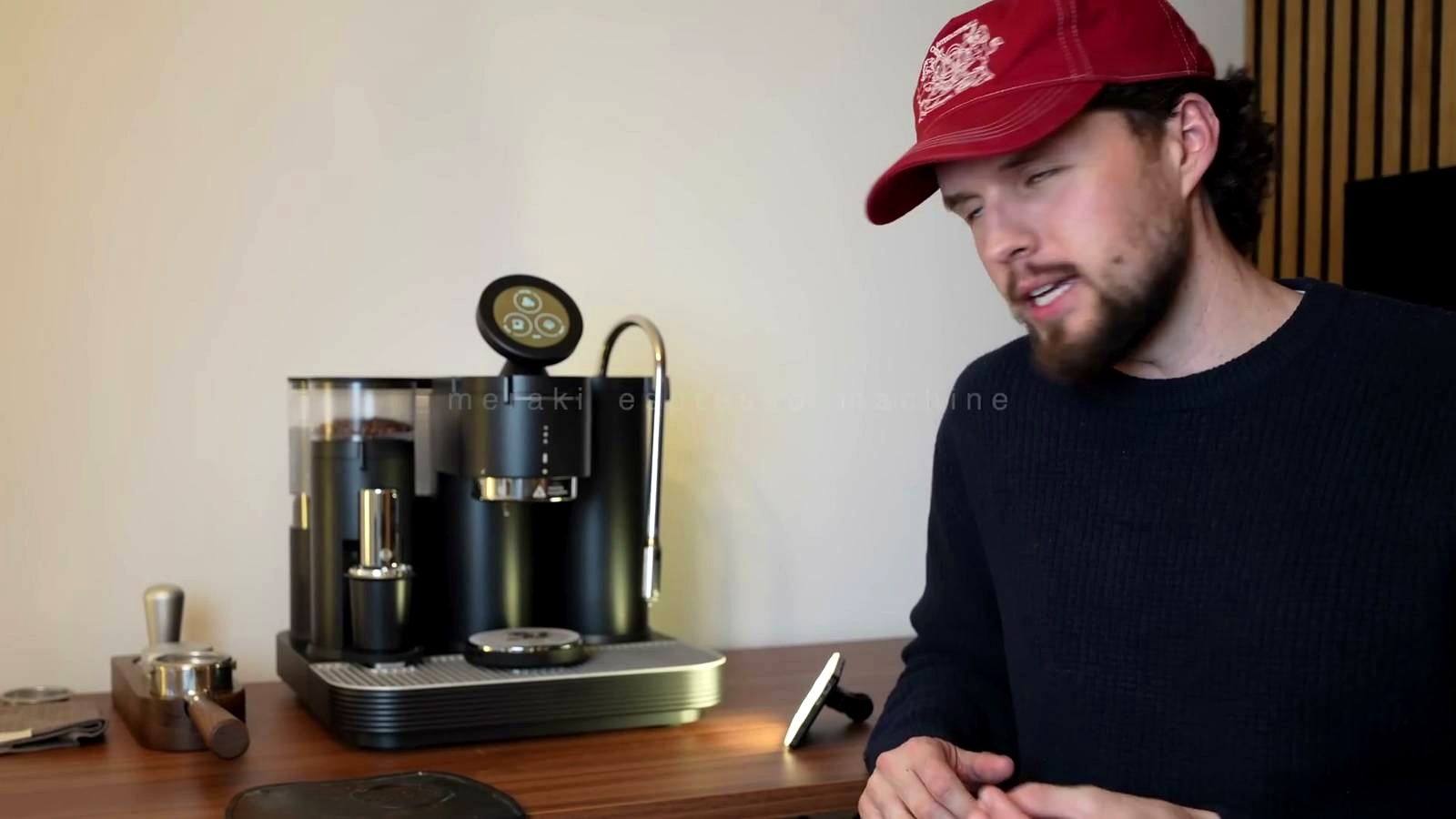
The Meraki espresso machine comes across as more than just another home coffee product. It feels like a complete home setup built for people who care about espresso, milk texture, and workflow, but do not want endless complexity.
With a dual boiler, PID, rotary pump, proper nine bars of pressure, a powerful steam wand, a capable built-in grinder, and a built-in brewing scale, it brings together the parts that usually live across an entire home coffee station.
And maybe that is the real reason it lands so well. It does not just promise better coffee at home. It makes the whole process feel possible.
FAQ
Is the Meraki espresso machine good for milk-based drinks?
Yes. It was praised specifically for flat whites, cappuccinos, and lattes thanks to its powerful steam wand and dual boiler setup that allows steaming and brewing at the same time.
Does the Meraki have a built-in grinder?
Yes. The machine includes a built-in grinder, and it was highlighted as being genuinely good, which is not always the case with all-in-one machines.
Do you need to buy extra accessories with the Meraki?
No. The machine is presented as a complete setup and includes a portafilter, spout attachment, distribution tool, tamper, dosing cup, blank basket, cloth, and more.
What size portafilter does the Meraki use?
It uses a 58mm portafilter, the same size commonly used on commercial coffee shop machines.
Can the Meraki pull shots and steam milk at the same time?
Yes. It is a dual boiler machine, so it can handle both tasks simultaneously.
Is the Meraki easy to use?
It appears to be. The machine keeps its interface focused on three main functions: brew, grinder, and steam, without overwhelming the user with unnecessary menu layers.
Are there any downsides mentioned in the review?
The main criticism was the paddle, which was said to feel a bit plastic and clicky. It was still described as functional.
Video Reference

Hi, I’m Peter Stone. I’m always noticing the simple things that make a place enjoyable — a relaxed atmosphere, a menu that actually makes you want to order, a corner table you’d happily sit at for an hour, or a café that just gets the vibe right. I like exploring casual cafés and food spots around Dubai and the UAE and writing about them in a way that feels honest and easy to read. Nothing too formal, just real impressions from places that stand out for the right reasons. If you enjoy finding new spots without the usual hype, you’ll probably feel at home here.